Description
Features:
- Comprehensive Coverage: The book delves into all aspects of organic farming, from soil health and crop management to pest control and sustainable practices. It offers a holistic view of farming that integrates traditional wisdom with modern scientific knowledge. Principles & traditional concepts of organic farming make it easy to implement organic farming techniques. The book provides detailed explanations on various factors of organic farming, including climate, light, rain, soil, weeds, pests & diseases, irrigation, and their natural indicators.
- Scientific Insights: Learn about the science behind organic farming practices. The book explains the biological, chemical, and physical processes that occur in the soil and plants, helping you understand how to optimize conditions for crop growth.
- Sustainable Practices: Emphasizes environment friendly and sustainable farming methods. Topics such as crop rotation, green manures, composting, and natural pest control are covered extensively, promoting long-term soil fertility and ecosystem health.
- Expert Contributions: Written by experienced agricultural experts & scientists, the book features in-depth knowledge and best practices.
- Illustrations and Diagrams: Richly illustrated with photographs, diagrams, and tables that enhance understanding and provide visual guidance. These visual aids help clarify complex concepts and techniques.
Specifications:
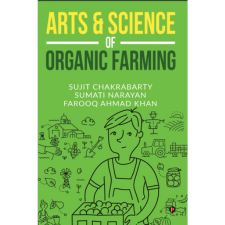
- Title: Arts & Science of Organic Farming
- Publisher: Notion Press
- Pages: 220
- First Edition
- Language: English
- Year of Publish: January 2019
- ISBN: 978-1-68466-979-0
Key Topics Covered:
- Introduction to Organic Farming: Understanding the philosophy and benefits of organic farming.
- Physiological aspects of Organic farming: Plants’ interaction with environment for adaptability is must for its survival.
- Importance of Cow in Organic farming: Cow has been designated equivalent to mother. Panch-gavya products from cow has extensive usage in organic farming.
- Relevance of Planting Calendar in farming: Life force is the energy received on earth from cosmos mainly in the form of sun rays which drives all the living organisms and plants are the primary receptors of sun rays.
- Soil Health: Techniques for building and maintaining fertile, healthy soil, including composting and mulching.
- Crop Selection and Rotation: Choosing the right crops and practicing effective crop rotation to enhance soil health and reduce pests.
- Natural Fertilization: Using organic fertilizers and amendments to nourish plants.
- Water Management: Efficient irrigation methods and water conservation strategies.
- Pest and Disease Management: Identifying and managing pests and diseases using natural, non-toxic methods.
- Biodiversity: Promoting biodiversity on the farm to create a balanced and resilient ecosystem.
Benefits of “The Arts & Science of Organic Farming”:
- Sustainable Farming: Learn how to implement sustainable farming practices that protect the environment and promote long-term soil health.
- Increased Productivity: Discover methods to enhance crop yields and quality through organic practices.
- Healthier Produce: Grow nutritious, chemical-free produce that is safe for consumption.
- Economic Viability: Explore strategies for making organic farming economically sustainable.
- Community and Connection: Join a community of like-minded individuals dedicated to organic and sustainable farming.
Conclusion: “The Arts & Science of Organic Farming” is an essential guide for anyone interested in organic agriculture. With its comprehensive coverage and scientific insights, this book equips you with the knowledge and skills needed to succeed in organic farming. Order your copy today from www.prakritkrishi.in and embark on a journey towards sustainable, productive, and eco-friendly farming.
Free shipping
Also Available Online: –
- Amazon.in
- Amazon.com
- Amazon.co.uk
- Flipkart.com
- Notionpress.com